Kamikistrobus primulus gen. et sp. nov., a new taxodioid fossil seed cone from the Upper Cretaceous of Hokkaido, Japan
Abstract
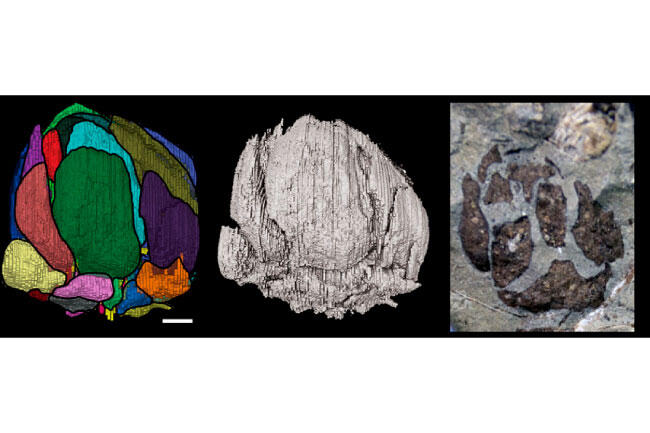
Kamikistrobus primulus gen. et sp. nov. is described as the earliest known fossil member of Taxodioideae (Cupressaceae), based on seed cones from the Upper Cretaceous (middle–upper Turonian) of Hokkaido, Japan. This fossil shares several key morphological features with Taxodium, including a shortened cone axis, peltate bract–scale complexes with lobed ovuliferous scales, and a single vascular bundle supplying each complex. In contrast, it clearly differs from Taxodium in possessing persistent bract–scale complexes with a rectangular escutcheon, a condition more reminiscent of Cryptomeria and Glyptostrobus. Phylogenetic analyses based on 68 morphological characters place K. primulus as sister to extant genera of Taxodioideae. These results suggest that the character states found in K. primulus are ancestral, and that further specializations arose in the course of diversification of the extant genera. In Taxodium, the deciduous bract–scale complexes facilitate ……
Read the original article on Review of Palaeobotany and Palynology
Article inforamation
Songyao Jiang, Toshihiro Yamada, Kamikistrobus primulus gen. et sp. nov., a new taxodioid fossil seed cone from the Upper Cretaceous of Hokkaido, Japan, Review of Palaeobotany and Palynology, Volume 348, 2026
DOI: 10.1016/j.revpalbo.2026.105543