Paleodietary analysis based on stable carbon isotope ratios of lipids preserved in sirenian fossil bones from Hokkaido, Japan
Joint press release (in Japanese) by Hokkaido University and Ashoro Museum of Paleontology
Abstract
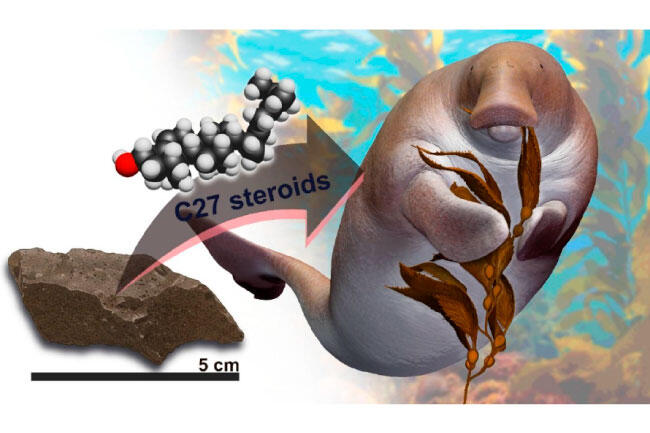
We analyzed the stable carbon isotope ratios (δ13C) of fatty acids (FAs) and sterols extracted from fossil sirenian bones (Metaxytherium, Dusisiren, and Hydrodamalis spissa) recovered from Miocene to Pliocene marine sediments in Hokkaido, Japan. FAs were detected in all specimens; however, based on their composition and isotopic characteristics, they are likely to include exogenous sources, including microbial lipids. In contrast, sterols such as cholesterol and its diagenetic derivatives extracted from the bones were interpreted as indigenous based on their compositions. The sterol δ13C values were − 13.7‰ for Metaxytherium (ca. 11 Ma), −20.5‰ for Dusisiren (9.2–7.3 Ma), and − 19.3‰ for Hydrodamalis spissa (4.7–3.7 Ma). These values were….
Read more on Palaeogeography, Palaeoclimatology, Palaeoecology
Article Information:
Tatsuya Shinmura, Ken Sawada, Paleodietary analysis based on stable carbon isotope ratios of lipids preserved in sirenian fossil bones from Hokkaido, Japan, Palaeogeography, Palaeoclimatology, Palaeoecology, 693, 2026
DOI: 10.1016/j.palaeo.2026.113809