Researcher Information

OIWA Rikuto

Lecturer

Exploration of new physical properties and elucidation of their mechanism by theoretical calculations

Department of Physics, Electronic Condensed Matter Physics
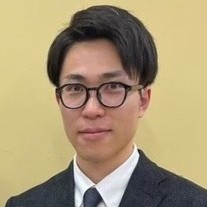
basic_photo_1
Theme

(1) Development of effective model calculation method based on DFT calculation and electronic multipole theory
(2) Elucidation of universal properties of chiral and ferroaxial materials
(3) Exploration of new multipole ordering, superconductivity, and linear and nonlinear responses

FieldElectrical Properties of Solids, Cross Correlation Phenomena, Computational Physics
KeywordDFT calculation, Multipole theory, Spin-orbit coupling, Structural phase transition, Superconductivity, Nonlinear responses

Introduction of Research

Materials in this world is composed of 1023nuclei and electrons interacting with each other. The complex interplay of various factors such as the types of constituent elements, differences in the geometric structure of crystals, and Coulomb interaction between electrons and spin-orbit coupling give rise to the diverse properties of materials. Metals, insulators, magnets, and superconductors are typical examples.
I am studying such diverse properties and phenomena of materials using theoretical methods such as DFT calculations that incorporate the fundamental elements of real materials and electronic multipole theory that describes electronic states in materials. I am also developing new computational methods for analyzing electronic properties in materials. Through these studies, I aim to explore new electronic states and response phenomena, and to create a new trend in condensed matter physics in the future.

Representative Achievements

Theory of superconductivity in hole-doped monolayer MoS2, R. Oiwa, Y. Yanagi, and H. Kusunose, Phys. Rev. B 98, 064509 (2018).
Systematic Analysis Method for Nonlinear Response Tensors, R. Oiwa and H. Kusunose, J. Phys. Soc. Jpn. 91, 014701 (2022).
Rotation and electric-field responses and absolute enantioselection in chiral crystals, R. Oiwa and H. Kusunose, Phys. Rev. Lett, 129, 116401 (2022).
Academic degreePh. D. (Science)
Self Introduction

I am working on elucidating mechanisms of physical phenomena and exploring new physical properties using DFT-based effective models. I am also interested in developing new computational methods. My hobbies are mainly reading and watching movies, and I also enjoy running and cycling to keep my health.

Academic background2018 B. S., Faculty of Science and Engineering, Meiji University
2020 M. S., Graduate School of Science and Technology, Meiji University
2020 JSPS Research Fellowships (DC1)
2023 Ph. D., Graduate School of Science and Technology, Meiji University
2023 Special Researcher for Basic Research (SPDR), First-Principles Materials Science Research Team, RIKEN Center for Emergent Matter Science
2025- Current position
Affiliated academic societyThe Physical Society of Japan
Room addressScience Building 2 2-10-13

Department of Physics, Electronic Condensed Matter Physics

OIWA Rikuto

Lecturer

basic_photo_1
What is your dream that you want to achieve through your research?

My dream is to discover physical phenomena that no one has ever seen before and to uncover their underlying principles through theoretical calculations. I am deeply fascinated by the moment when an original idea leads to the discovery of a new phenomenon or the birth of a new concept. This pursuit of understanding and curiosity about the unknown phenomena is one of the driving forces behind my research.

basic_photo_1
What is the research theme that you are currently focusing on?

I am studying unusual electronic states and response phenomena that arise in materials. Electrons sensitively respond to changes in crystal structure, symmetry, interactions with surrounding nuclei and other electrons, as well as external conditions such as temperature and pressure, leading to a wide variety of behaviors. For example, in elemental tellurium crystal, the atoms form right- and left-handed helical structures, much like a spiral staircase. When an electric current is applied along the helical axis, the electron spins tend to align in that direction, producing magnetization. This intriguing phenomenon originates from the breaking of mirror symmetry—meaning that a right-handed helix does not coincide with its mirror-reflected image. Using theoretical calculations, I analyze how such crystal symmetry and electron motion give rise to exotic responses and various charge or magnetic orders. I am also working on developing new theoretical methods to better understand these phenomena.

basic_photo_1
What do you usually do when your research work gets stuck?

On sunny days, I commute by bicycle, and I prefer routes where I can keep moving without stopping at red lights—choosing paths with green lights as long as they are not too much of a detour. I take a similar approach in research: when I encounter a problem that I cannot solve even after thinking about it for a whole day, I intentionally shift my focus to another research topic. Just as taking a detour on my bike sometimes leads me to unexpected cafés or new scenery, thinking about another topic often helps me find the key to solving a problem that seemed impossible to overcome.

basic_photo_1
Please tell us about yourself; things you are good at, your favorites, hobbies, and daily routines.

My hobby—once again related to bicycles—is cycling. As a student, I used to travel for one or two weeks at a time with a tent strapped to my bike, often exploring long distances with friends. These days, long trips have become difficult physically, so I mainly enjoy day rides. Hokkaido offers many beautiful landscapes, and simply riding through them is refreshing and helps clear my mind.