KOTANI Tomoya
Associate Professor
To unravel mysteries in the birth of animals
Department of Biological Sciences, Reproductive and Developmental Biology

| Theme | To elucidate cellular and mollecular mechanisms of vertebrate oogenesis and embryogenesis |
| Field | Cell Biology, Molecular Biology, Developmental Biology, Genetics |
| Keyword | Zebrafish, Mouse, Maternal Factor, Oogeneis, Early Development, Insertional Mutation, Transposon, Meiosis, Mitotic Cleavage, Morphogenesis, Embryonic Axis Formation |
Introduction of Research
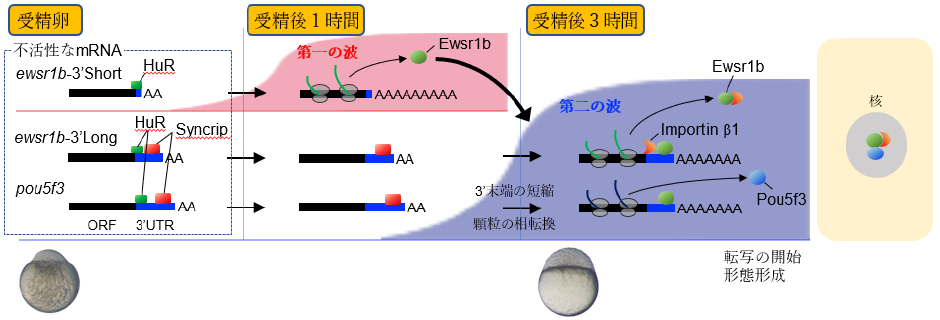
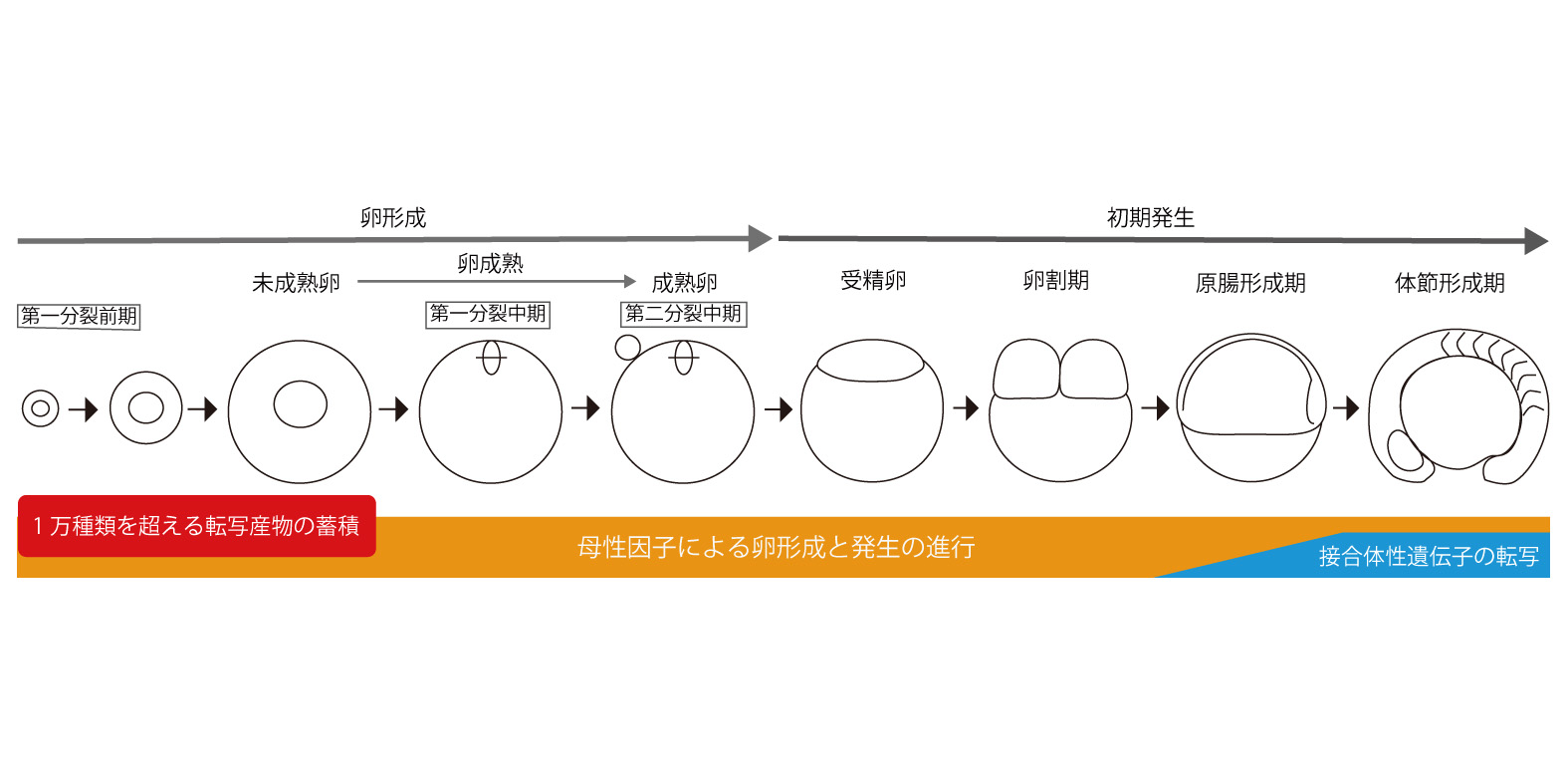
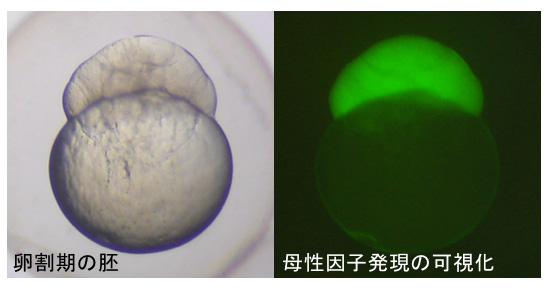
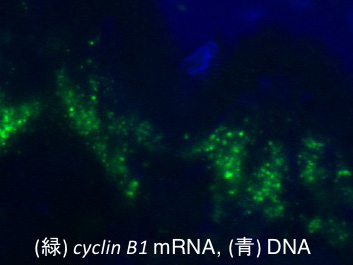
A multicellular organism begins with a single cell, the fertilized egg. Although oogenesis and development of many species have been morphologically analyzed, little is known about physiological control of these processes. Maternal factors, which are accumulated in the egg during oogenesis, control almost all cellular functions and patterning decisions that occur prior to the activation of zygotic genome and further promote many processes beyond this period. Recent studies demonstrated that more than ten thousand mRNAs are accumulated in vertebrate oocytes. Interestingly, thousands of them are translationally repressed in the egg and are activated at the appropriate time and site after fertilization, promoting the progression of diverse developmental processes. We investigated maternal factors deposited in oocytes that promote developmental processes using zebrafish and mice as model animals. Our aim is to find previously unknown principles that drive developmental processes by isolating and analyzing maternal factors.
Representative Achievements
| Academic degree | Ph.D. |