Horizontal acquisition of nicotine catabolism gene cluster enhances Arthrobacter fitness within tobacco root microbiota
Joint press release (in Japanese) by Hokkaido University, Institute of Physical and Chemical Research, Kyoto University
Abstract
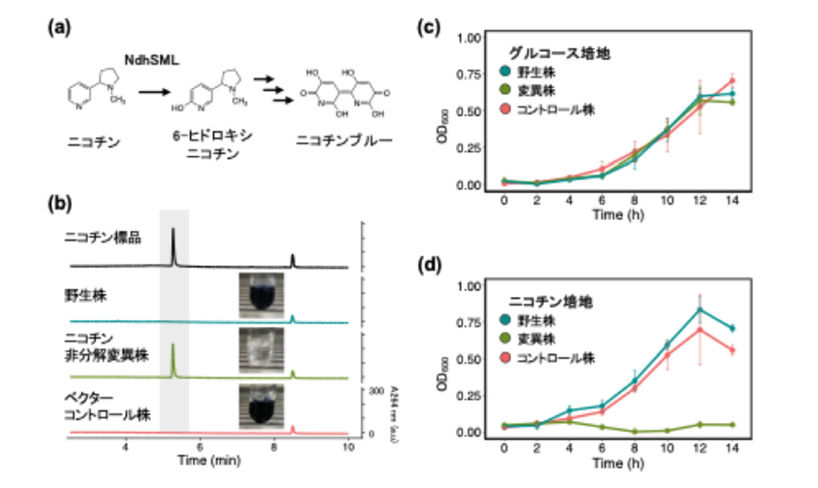
Plant roots are hotspots for interactions with soil microbes, where a characteristic bacterial community structure is formed. Plant specialized metabolites often play pivotal roles in this assembly process. However, the molecular basis underlying root microbiota responses to these bioactive compounds, and how such metabolic interactions shape the assembly of host-specific root microbiota, remain largely unknown. Nicotine is a toxic alkaloid predominantly produced by the genus Nicotiana, and the genus Arthrobacter is known as one of the nicotine-degrading bacteria in the tobacco root microbiota. In this study, we used the tobacco–Arthrobacter interaction system as a model and integrated comparative genomics and experimental genetic manipulation assays to uncover the role of bacterial catabolism capacity for host specialized metabolites in shaping host-specific root microbiota.
Our findings illustrated….
Read more on Microbiome
Article Information:
Horizontal acquisition of nicotine catabolism gene cluster enhances Arthrobacter fitness within tobacco root microbiota, Tomohisa Shimasaki, Yui Nose, Sachiko Masuda, Arisa Shibata, Tsubasa Shoji, Shuhei Yabe, Maiko Furubayashi, Yoshitomo Kikuchi, Ken Shirasu, Kazufumi Yazaki, Yasunori Ichihashi, Akifumi Sugiyama & Ryohei Thomas Nakano, Microbiome (2026)
DOI:10.1186/s40168-026-02466-x