Prey capture strategies relate to prey position in the scale-eating cichlid Perissodus microlepis
Abstract
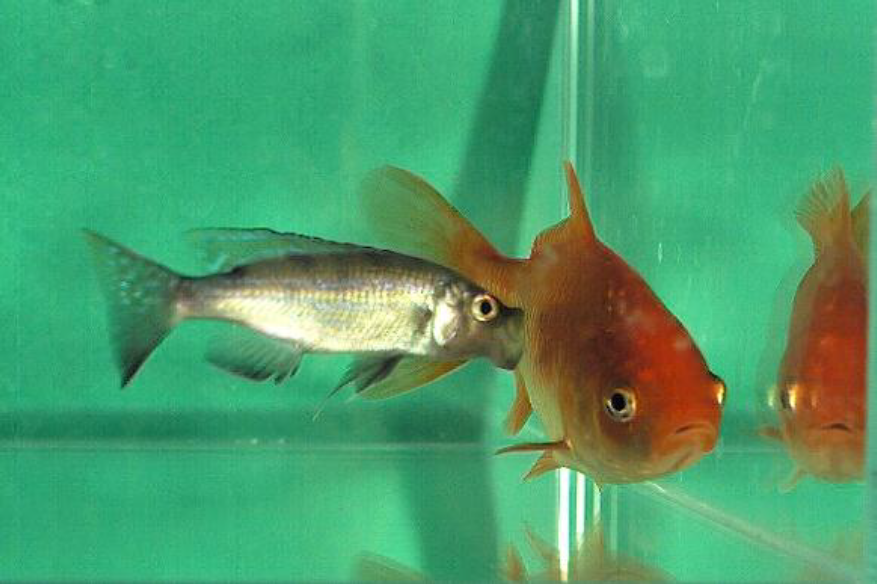
Predators have evolved sophisticated behavioral patterns that enable efficient prey capture. The scale-eating cichlid Perissodus microlepis exhibits pronounced morphological asymmetry in mouth-opening direction, corresponding to behavioral laterality in attack direction. Given that recognizing and tracking the flank of prey are crucial for successful predation, we hypothesized that the morphological asymmetry also influences their spatial positioning relative to prey during attack initiation. To test this idea, we simultaneously tracked predator and prey movements using DeepLabCut and analyzed the predatory sequence. Not only strike direction but also the lateralized approach initiation position was correlated with mouth asymmetry. Additionally, trajectory analyses revealed two distinct predation strategies based on the predator’s relative position to the prey at the start of the approach: a rear approach, whereby predators….
Read the original article on Biology Open
Article inforamation
Kai Koike, Matasaburo Fukutomi, Yuichi Takeuchi, Prey capture strategies relate to prey position in the scale-eating cichlid Perissodus microlepis, Biology Open, 15 (7)2026,
DOI:10.1242/bio.062699