| Field | Marine apicomplexan and dinoflagellate (alveolate) diversity and evolution |
| Keyword | Protistology, Biodiversity; Microscopy, Genetics, Phylogenomics, Transcriptomics, Toxicity, Symbiosis |
Introduction of Research
I study the diversity and evolution of a broad range of organisms, generally referred to as protists (single-celled eukaryotes). Up to this point, I have primarily studied organisms living in marine environments, in areas of the Eastern Pacific Ocean, near Canada, as well as the Western Pacific waters around Japan (Okinawa, Tokyo, and Hokkaido).
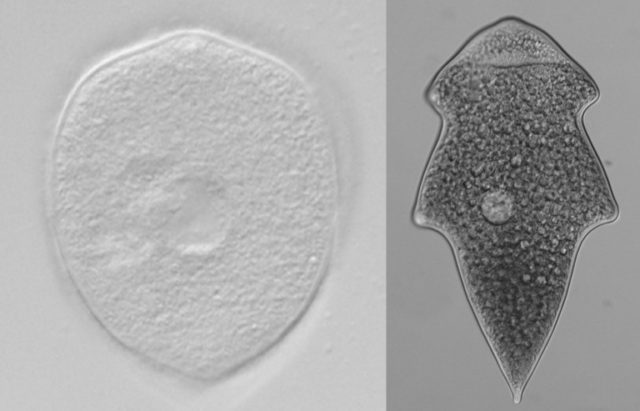
My interests have mostly revolved around apicomplexan parasites of invertebrates. The particular assemblage of apicomplexan parasites I study are referred to as gregarines; they are some of the earliest lineages, if not the earliest lineage, of apicomplexans. They parasitize invertebrates such as polychaetes (marine worms), crustaceans (e.g., crabs and shrimp), and tunicates (just to name a few). Other lineages of marine apicomplexans also infect invertebrate groups such as coral and mussels (shellfish). Overall, by improving our knowledge of the biodiversity of marine apicomplexans, and investigating the relationships they have with each other and their host groups, it is my goal to fundamentally transform and enhance how evolution is viewed within this group.
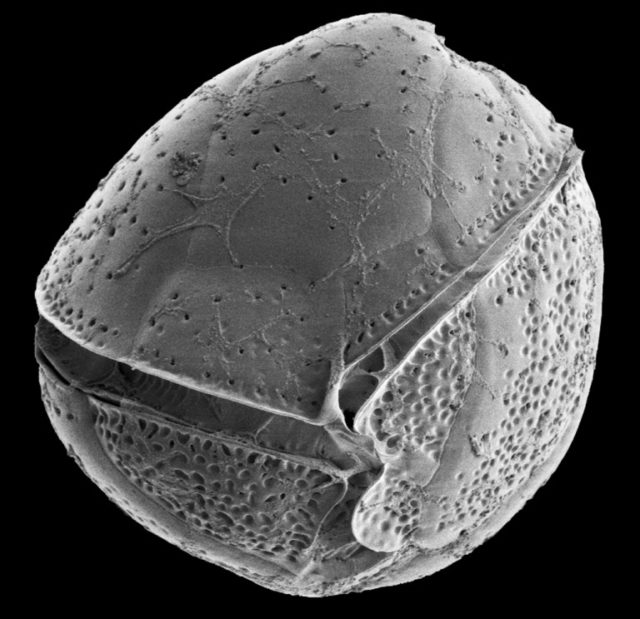
More recently, I have started to study benthic marine dinoflagellates (microalgae), their diversity and production of toxin compounds. I am particularly interested in the diversity of dinoflagellates in warmer waters, especially those around the subtropical island of Okinawa, Japan. This work involves the mass cultivation of microalgae, and has some chemical elements such as High-pressure liquid chromatography-mass spectrometry (HPLC-MS).
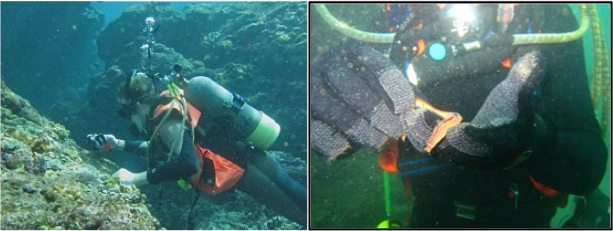
My research employs a wide-range of tools and techniques including molecular phylogenetics and microscopy, biochemistry, and the cultivation of organisms. This research examines organisms from relative shallow water by SCUBA diving/snorkeling, all the way to the deep sea, for which exotic deep-sea submersibles are used.
Representative Achievements
| Room address | Building #5 5-610 |