Researcher Information

KATOH Toru

Associate Professor

Unraveling the evolutionary history of drosophilids

Department of Biological Sciences, Biodiversity

basic_photo_1
Theme

Study on phylogeny and evolution in Drosophilidae

Fieldphylogeny, phylogeography, population genetics
Keyworddrosophilids, evolution, biodiversity, phylogenetic tree, DNA

Introduction of Research

Drosophilid flies are extensively studied organisms in biological science. Since Drosophila melanogaster was used as a material for genetic studies by T. H. Morgan and his colleagues, these flies have been used as model organisms in various fields, including genetics, ecology, behavior, development, and so on.
Taxonomically, these flies belong to the family Drosophilodae. The family Drosophilidae is a large group of muscomorphan Diptera, including over 4000 described species. These species are widely distributed around the world, ranging from the tropics to the temperate zones. Furthermore, their breeding sites are also diverse; plant leaves, fungi, sap fluxes of trees, fruits, and flowers. To date, a large amount of knowledge has been accumulated for the biology of Drosophilidae. Nevertheless, the evolutionary history of Drosophilidae, which should provide a basis for the various studies using drosophilid flies, has not well been understood.
In order to explore this problem, we study on the phylogeny and character evolution of several drosophilid species that have not yet been focused by other studies.

study-image-0
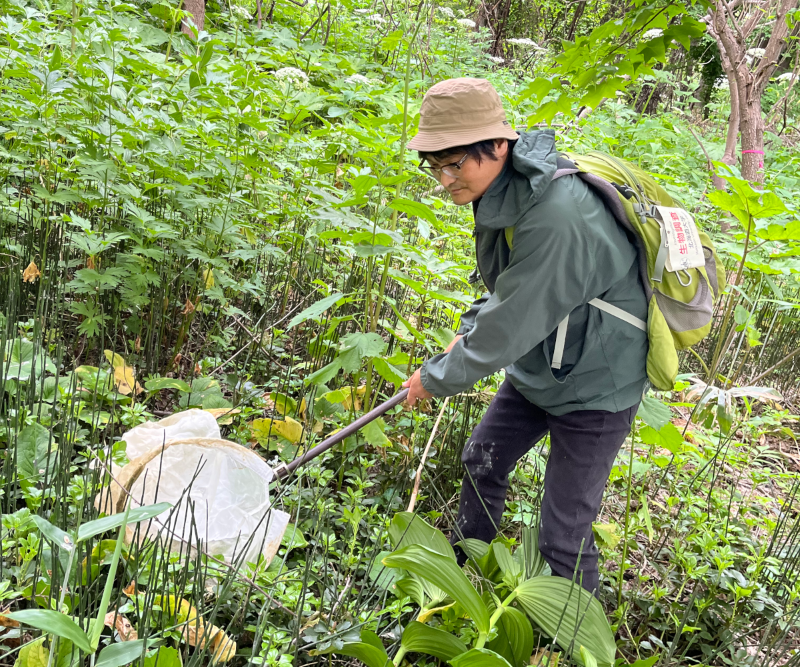
Drosophilid flies collected in a field
study-image-1
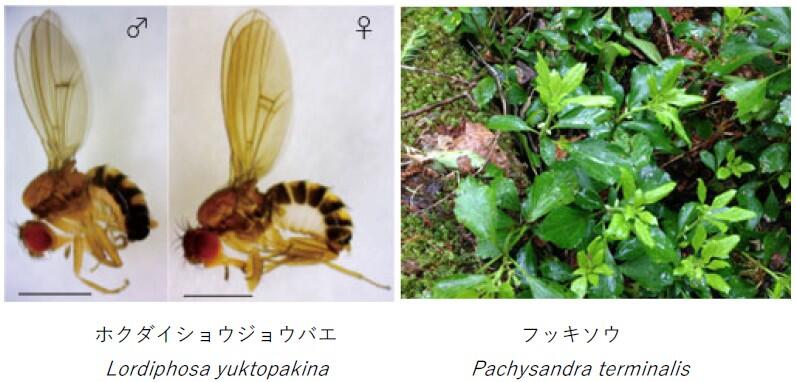
Some species belonging to Drosophilidae
study-image-2
Multiple origins of Hawaiian drosophilids. From a reconstruction of ancestral biogeography, we inferred that Idiomyia and Scaptomyza diverged outside the Hawaiian Islands and then independently colonized the Hawaiian Islands.

Representative Achievements

Mitsuhashi K, Izumitani HF, Toda MJ, Watabe H, Kamimura Y, Takahashi A, Gao JJ, Katoh T (2026) Recent speciation with host change in the genus Lordiphosa Basden (Diptera: Drosophilidae) breeding on decayed herbaceous plants, with description of a new species based on integrative taxonomy. Entomological Science 29: e70005.
Zhang Y, Toda MJ, Watabe H, Katoh T (2024) Alpha-amanitin tolerance of adult flies of mycophagous and non-mycophagous species in Drosophilidae. Entomological Science 27: e12577.
Zhang Y, Katoh TK, Finet C, Izumitani HF, Toda MJ, Watabe H, Katoh T (2021) Phylogeny and evolution of mycophagy in the Zygothrica genus group (Diptera: Drosophilidae). Molecular Phylogenetics and Evolution 163: 107257.
Katoh T, Izumitani HF, Yamashita S, Watada M (2017) Multiple origins of Hawaiian drosophilids: Phylogeography of Scaptomyza Hardy (Diptera: Drosophilidae). Entomological Science 20: 33-44.
Izumitani HF, Kusaka Y, Koshiikawa S, Toda MJ, Katoh T (2016) Phylogeography of the subgenus Drosophila (Diptera: Drosophilidae): Evolutionary history of faunal divergence between the Old and the New Worlds. PLoS ONE 11: e0160051.
basic_photo_2
Academic degreePh.D.
Affiliated academic societyThe Entomological Society of Japan, The Zoological Society of Japan, The Society of Evolutionary Studies, Japan, The Genetics Society of Japan

Department of Biological Sciences, Biodiversity

KATOH Toru

Associate Professor

basic_photo_1
What research topic are you currently focusing on?

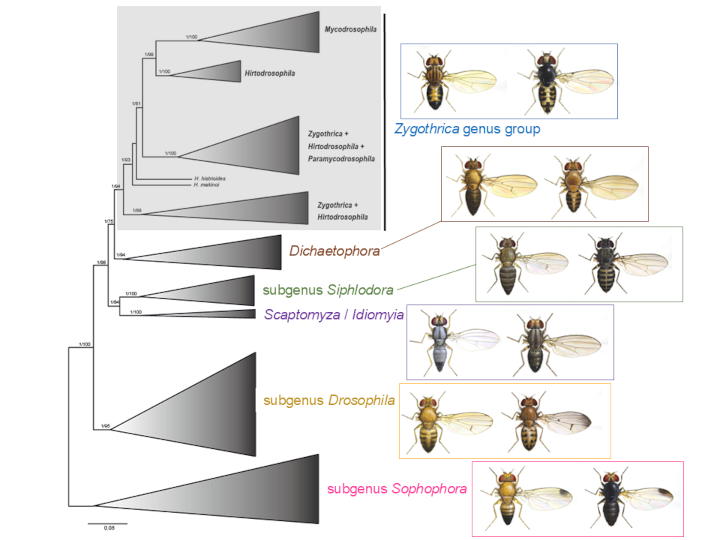
To establish the definitive evolutionary tree of drosophilid species, we are collaborating with researchers abroad to conduct phylogenetic analyses based on DNA variation. Thanks to these efforts, we have obtained well-supported phylogenetic trees for certain groups of drosophilids.

Figure: Phylogenetic tree for some major groups of drosophilids
basic_photo_1
What inspired you to become a researcher?

When I was a Master’s student, I struggled with whether to enter the workforce or pursue a Ph.D. after completing my degree. Ultimately, my desire to gain a deeper understanding of evolutionary biology led me to pursue a Ph.D. Looking back now, I break out in a cold sweat just thinking about how reckless that choice was. Fortunately, however, I am still able to work in research and education today, so please forgive me—the outcome turned out well!

basic_photo_1
Please tell us about yourself, including your strengths, favorite things, hobbies, and daily routine.

When I was an undergraduate, I used to go mountain climbing, but now my stamina has really declined. So, I’ve turned to watching footage of mountains on late-night TV. I’ve also decided to walk on flat ground instead of in the mountains. That way, it’s not physically demanding.