FUKUSHIMA Shun
Assistant Professor
Unraveling earthquake phenomena through cutting-edge offshore seismic observation
Institute of Seismology and Volcanology, Ocean Bottom Seismology and Tsunami
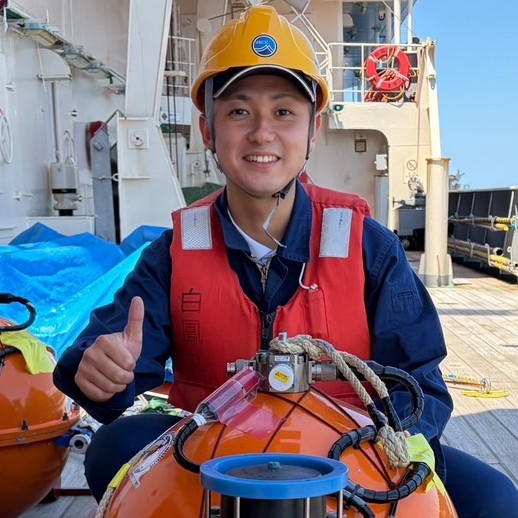
| Theme | Elucidating the mechanisms of earthquakes and fault slip at plate boundaries through offshore seismic observations using ocean-bottom seismometers and fiber-optic sensing, combined with the development of new seismological theories and analysis techniques. |
| Field | Marine seismology, Observational seismology |
| Keyword | Offshore seismic observation, Ocean-bottom seismometer, Fiber-optic sensing |
Introduction of Research
We would like to unravel the mechanisms of earthquakes. Many earthquakes, including tsunami-generating (tsunamigenic) earthquakes, occur in marine areas. Therefore, we focus on the study of earthquakes in marine areas.
In particular, we conduct marine observations using ocean-bottom seismometers and fiber-optic sensing around Japan and the world. We also develop new theories and analysis methods to make full use of these new types of data. By combining new data with new methods, we aim to reveal the true mechanisms of earthquakes.
Representative Achievements
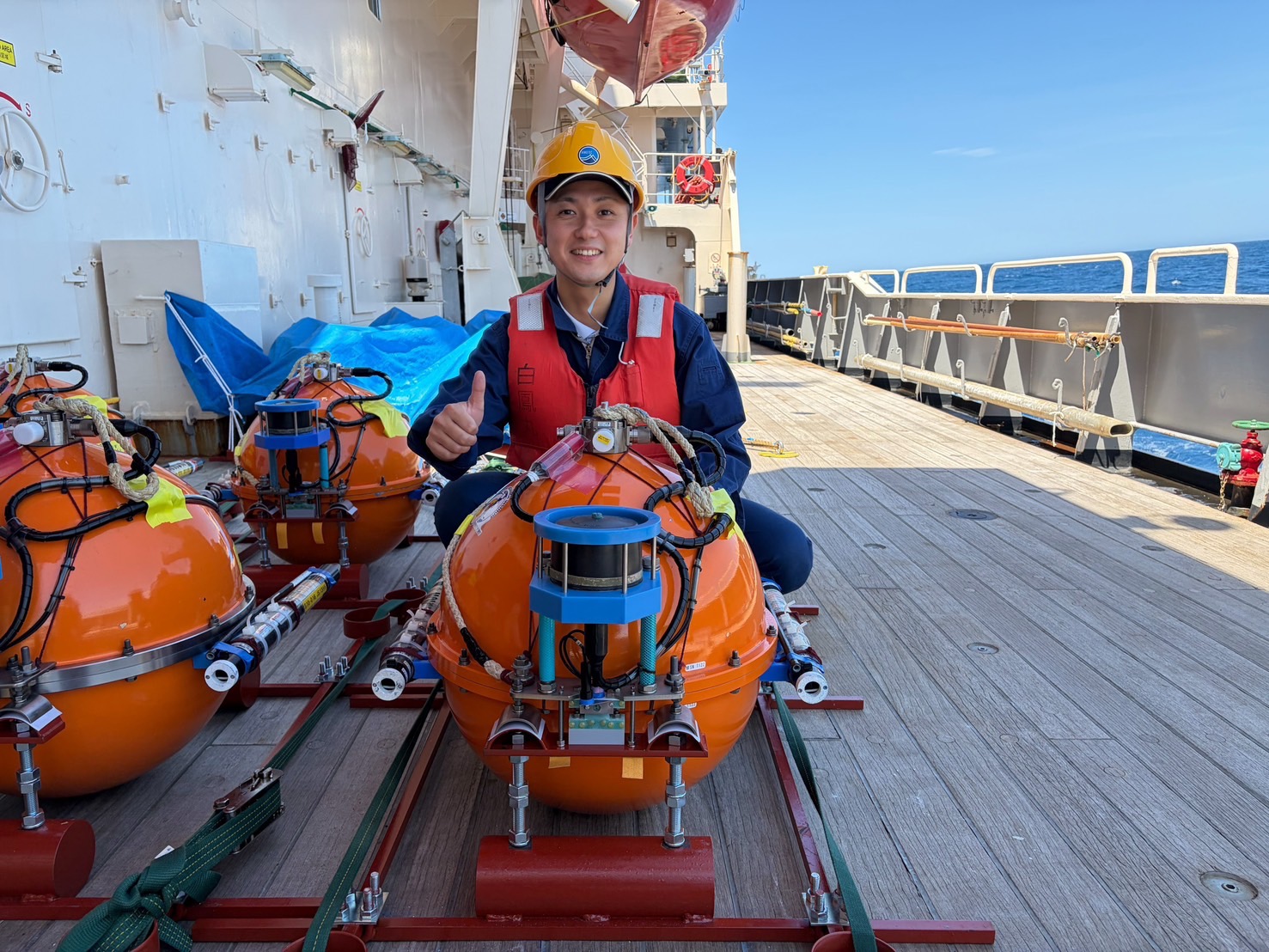
| Self Introduction | I was born and raised in Edogawa, Tokyo. I have loved fish since childhood and often went fishing. I moved to Hokkaido for university and spent six years in Sapporo, from my undergraduate years until entering the master's program. After that, I continued my research life in Tokyo and Sendai, and returned to Hokkaido after four years. The ocean, which I have been familiar with since childhood, is now my field of earthquake research. |
| Academic background | 2014 Graduated from Tokyo Metropolitan Komaba High School 2019 B.Sc., Department of Earth and Planetary Sciences, Faculty of Science, Hokkaido University 2021 M.Sc., Department of Natural History Sciences, Graduate School of Science, Hokkaido University 2024 Ph.D. (Science), Department of Earth and Planetary Science, Graduate School of Science, The University of Tokyo 2024 Postdoctoral Researcher, Research Center for Prediction of Earthquakes and Volcanic Eruptions, Graduate School of Science, Tohoku University 2025 Assistant Professor, Institute of Seismology and Volcanology, Faculty of Science, Hokkaido University (present position) |
| Affiliated academic society | The Seismological Society of Japan, Japan Geoscience Union |
| Room address | Faculty of Science Building 4 4-201 |