Researcher Information

Nomura Kosuke

Associate Professor

Toward a unified description of atomic nuclei

Department of Physics, Nonlinear Physics
basic_photo_1
Theme

Nuclear structure and dynamics, developing a microscopic theory for nuclear collective motions, and applications to other related areas.

FieldNuclear Theory
KeywordNuclear Structure, Nuclear Collective Motions, Exotic Nuclei, Fundamental Symmetries, Nuclear Astrophysics, Quantum Many-Body Theory

Introduction of Research

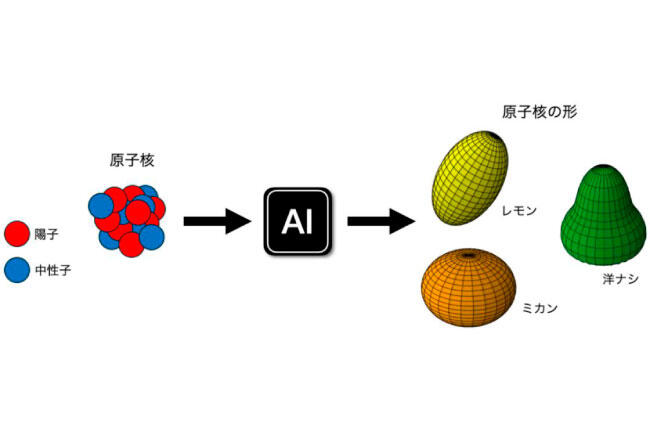
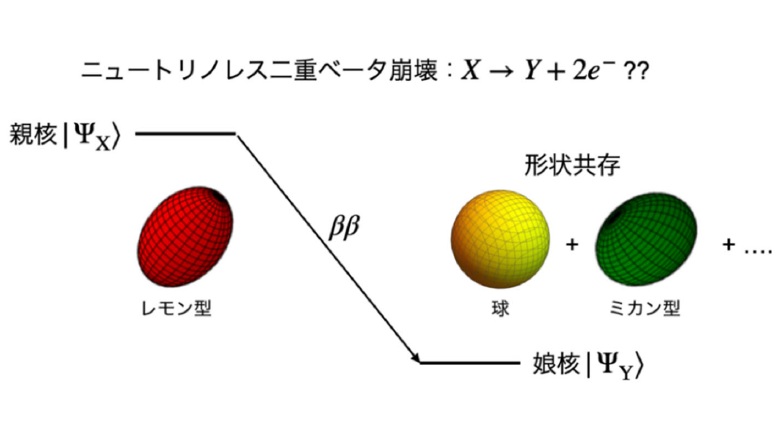
The atomic nucleus is a self-organized many-body quantum system of nucleons - protons and neutrons. The nucleus takes on geometrical shapes that correspond to a spherical vibrator, and ellipsoidal deformed rotor. This feature is known as collective motion, which exhibits remarkable regularities and symmetries as observed in the vibrational or rotational energy spectra and characteristic patterns of electromagnetic transition rates. How the atomic nucleus organizes itself into a variety of shapes and what are the microscopic origins have been a central problem in low-energy nuclear physics, and are also common to quantum many-body systems in general.

My research is mainly focused on the above problem, and I am primarily interested in developing a theory allowing for a universal and microscopic description of the structure and dynamics of heavy nuclei, constructed by using state-of-the-art nuclear many-body methods. It has nowadays become possible to produce and accelerate radioactive nuclei at experiments, which has opened many new avenues for low-energy nuclear physics. I am involved in international collaborations with both theoretical and experimental nuclear physicists concerning the nuclei that are of interest for experiments using RI beams. I also study some basic problems in particle physics and astrophysics in the context of nuclear physics, aiming, in particular, to provide inputs with the related experiments.

Representative Achievements

Kosuke Nomura, Noritaka Shimizu, and Takaharu Otsuka, "Mean-Field Derivation of the Interacting Boson Model Hamiltonian and Exotic Nuclei", Phys. Rev. Lett. 101, 142501 (2008)
K. Nomura, N. Shimizu, D. Vretenar, T. Nikšić, and T. Otsuka, "Robust Regularity in γ-Soft Nuclei and its Microscopic Realization", Phys. Rev. Lett. 108 , 132501 (2012)
K. Nomura, D. Vretenar, T. Nikšić, and Bing-Nan Lu, "Microscopic description of octupole shape-phase transitions in light actinides and rare-earth nuclei", Phys. Rev. C 89, 024312 (2014)
K. Nomura and J. Jolie, "Structure of even-even cadmium isotopes from the beyond-mean-field interacting boson model", Phys. Rev. C 98, 024303 (2018)
Kosuke Nomura, "Two-neutrino double-β decay in the mapped interacting boson model", Phys. Rev. C 105, 044301 (2022)
Academic degreePh.D.
Self Introduction

Born in Osaka

Academic background2007 B.S., Department of Physics, Faculty of Science, The University of Tokyo
2009 M.Sc., Department of Physics, Faculty of Science, The University of Tokyo
2009 JSPS Research Fellow
2012 Ph.D., Department of Physics, Faculty of Science, The University of Tokyo
2012 JSPS Fellow for Research Abroad, Institute of Nuclear Physics, University of Cologne, Germany
2013 Marie-Curie Fellow, Grand Accélérateur National d'Ions Lourds (GANIL), CEA/CNRS, France
2015 Postdoctoral fellow, Department of Physics, Faculty of Science, University of Zagreb, Croatia
2016 JSPS Postdoctoral Research Fellow, Center for Computational Sciences, University of Tsukuba
2018 Postdoctoral fellow, Department of Physics, Faculty of Science, University of Zagreb, Croatia
2018 MEXT Excellent Young Researcher, Japan Atomic Energy Agency
2019 Assistant Professor, Department of Physics, Faculty of Science, University of Zagreb, Croatia
2023- Associate Professor, Department of Physics, Faculty of Science, Hokkaido University
2023- Director, Nuclear Reaction Data Center, Faculty of Science, Hokkaido University
Affiliated academic societyPhysical Society of Japan, American Physical Society, European Physical Society
Room addressScience Building 2 10-09

Department of Physics, Nonlinear Physics

Nomura Kosuke

Associate Professor

basic_photo_1
What made you decide to become a researcher?

The answer would depend on how one defines a “researcher”. Actually, there were not any particular circumstances or events that drove me to set out scientific research. I like to do what I love to do, just following my intuition, and such a way of life has never changed since I was a child; I have learned a lot (not necessarily in schools and university), worked on specific problems in specialized field, and enjoyed life, just as I like. Currently I have several graduate students in my research group, and my policy is to let the students work on their own initiative on subjects that truly interest them.

basic_photo_1
Please tell us about yourself; things you are good at, your favorites, hobbies, and daily routines.

I like travelling, whether the one related to the research activity or the personal one, and whether the travelling abroad or in Japan. Travelling abroad by air planes are especially nice, because moving physically very fast itself makes me to feel something extraordinary. In addition, I love to drive my own car to go for a trip, since driving the car allows me to go anywhere I like and whenever it suits me. I prefer to be somewhere tranquil and experience nature rather than visiting tourist attractions or shopping. Quite sometimes, when driving a car in country side there appears unexpectedly stunning scenery that is not very well known and usually goes unnoticed for most travelers and locals. I also like to do simple things, and keep my rooms and offices tidy.

basic_photo_1
Free subject

Before I held the current position in Hokkaido University, I had been in Europe for more than ten years for postdoctoral research and as a faculty member. I worked specifically in Germany, France, and Croatia, and also have visited many countries in Europe. For most of my time abroad, I was in Croatia. The country is probably not quite familiar to most Japanese, and is quite different in many aspects from what we imagine. I enjoyed living in Europe, mainly because I had much freedom at that time. Staying abroad for such a long period of time has been and will be invaluable assets for me. Being abroad, one is often encountered something unexpected, and his/her past experience and knowledge do not always help. In most European countries it is especially important to think and act independently, and one should be responsible for his/her own doing anything. Staying abroad has had great impacts on my way of thinking.