GARCIA-ESCOBAR Fernando
Specially Appointed Assistant Professor
Accelerating Catalyst Design through Informatics
Department of Chemistry, Inorganic and Analytical Chemistry
| Theme | Development of Machine Learning-assisted Methodologies to Accelerate Catalyst Design and Discovery |
| Field | Data Science, Catalyst Informatics, Materials Informatics, Machine Learning, Algorithm Development, Heterogeneous Catalysis |
| Keyword | Catalyst Informatics, Materials Informatics, Machine Learning, Catalyst Screening, Descriptor Design, Inverse Catalyst Design |
Introduction of Research
Catalysts play a central role in modern society, enabling the production of a wide range of chemicals, energy conversion processes, and the treatment of harmful waste. Discovering new catalytic materials and improving existing ones is essential for making more efficient and sustainable use of our resources.
In recent years, Machine Learning (ML) and Artificial Intelligence (AI)–assisted workflows have increasingly contributed to the discovery and optimization of materials across many applications. However, Materials and Catalyst Informatics remain emerging fields, and there is still no established, systematic methodology for catalyst design.
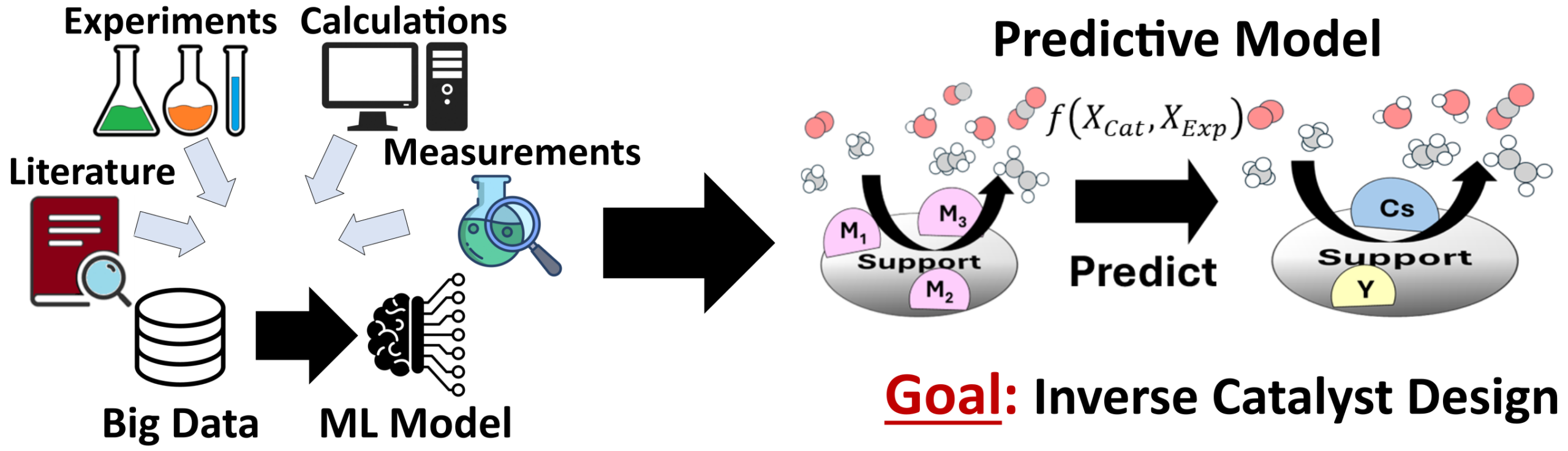
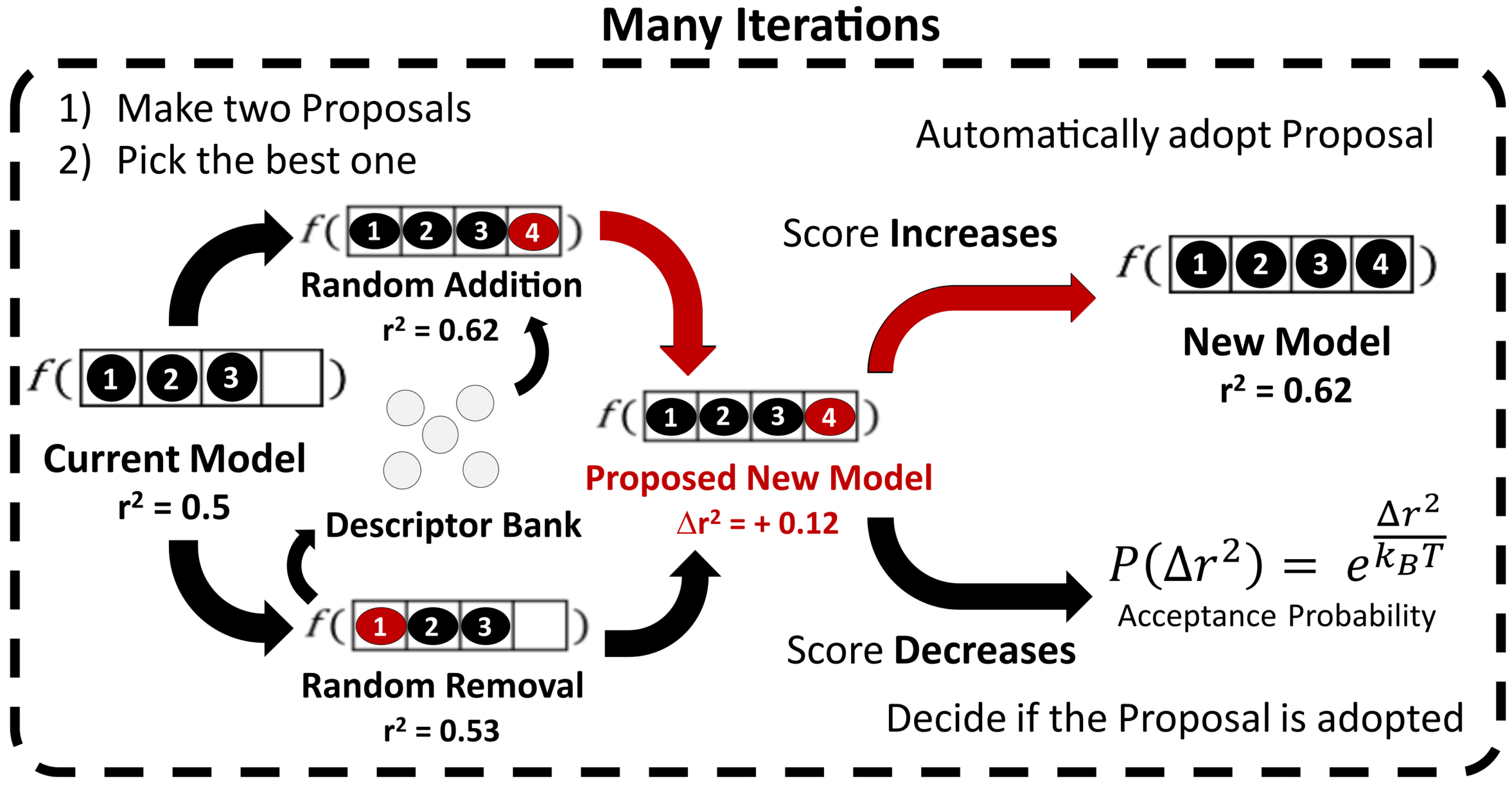
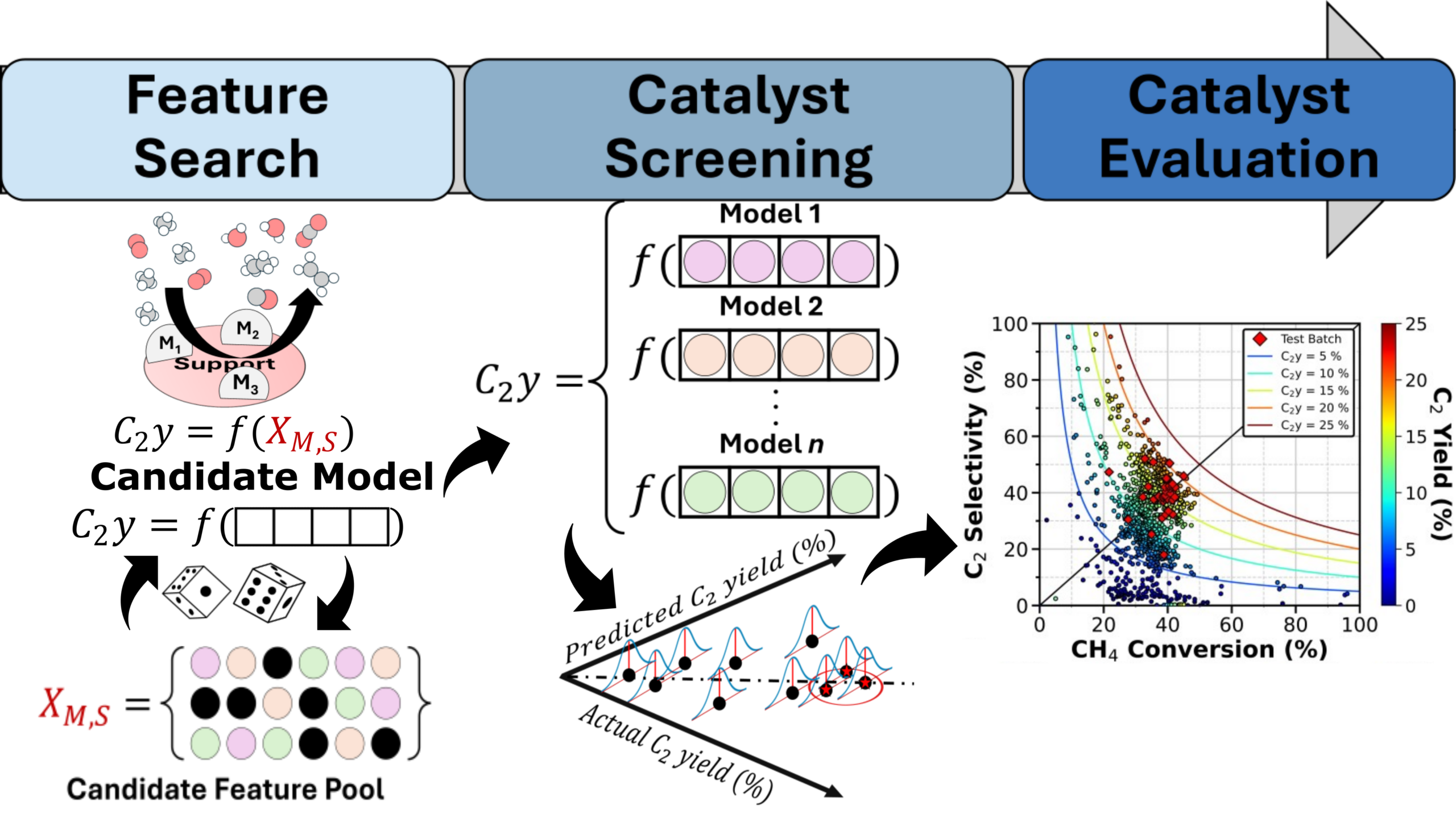
My research focuses on developing Machine Learning–assisted methodologies for inverse catalyst design, in which predictive models trained on existing materials are used to screen and identify promising new catalyst candidates. By establishing robust informatics-based design frameworks, this approach can be connected to automated experimental platforms, integrating data-driven modeling with robotic experimentation. Ultimately, this workflow aims to accelerate the discovery and development of efficient catalysts and functional materials.
Representative Achievements
K. Shibata, F. Garcia-Escobar, T. Tashiro, L. Takahashi and K. Takahashi,
Chem. Sci., 16, 16703-16711
F. Garcia-Escobar, L. Takahashi, A. Shaaban, S. Nishimura and K. Takahashi,
Catal. Sci. Technol., 2025, 15, 92-99
F. Garcia-Escobar, T. Taniike and K. Takahashi,
JCIM, 2024, 64 (5), 1512-1521
F. Garcia-Escobar, S. Nishimura and K. Takahashi,
JPCC, 2023, 127 (13), 6152-6166
| Academic degree | Ph. D. |
| Self Introduction | I am from northern Mexico, born in Culiacán and raised in Monterrey. Through opportunities to work across different subfields of Chemistry and in diverse research environments, I've developed a broad perspective that I now incorporate to my work on the design of new materials. My goal is to create materials that can contribute positively to society. |
| Academic background | 2016 B. S., Chemistry and Nanotechnology Engineering, Monterrey Institute of Technology 2019 M. S., Manufacturing Systems, Monterrey Institute of Technology 2019 Lecturer, School of Engineering and Sciences, Monterrey Institute of Technology 2025 Ph.D., Graduate School of Chemical Sciences and Engineering, Hokkaido University 2025 Postdoctoral Researcher, Faculty of Science, Hokkaido University 2025 Specially Appointed Assistant Professor, Faculty of Science, Hokkaido University |
| Room address | Science Building 7 7-508 |