SUNAGA Ayaki
Assistant Professor
Exploring the Moment of Life’s Origin in Space Through Molecular Spectroscopy and Chemical Reactions
Department of Chemistry, Physical Chemistry
| Theme | Development of Rotation-Vibration Theory for Describing Large-Amplitude Vibrations and Its Application to Interstellar Chemistry |
| Field | Theoretical chemistry, Physical chemistry, Molecular spectroscopy, Astrochemistry, Quantum biochemistry |
| Keyword | Amino acids, Large-amplitude motion, Molecular spectra, High-precision Calculations, Relativistic quantum chemistry, New physics beyond the standard model of particles |
Introduction of Research
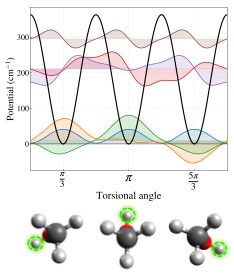
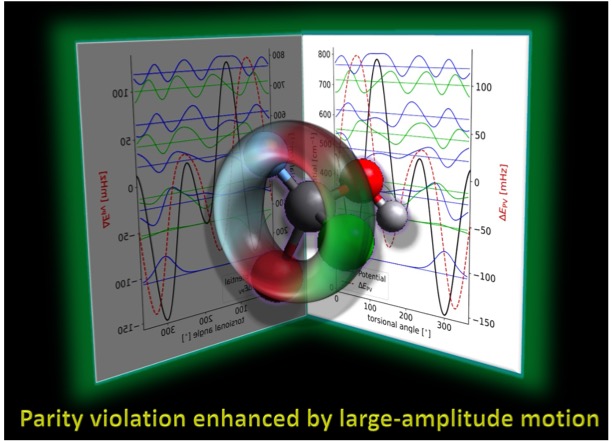
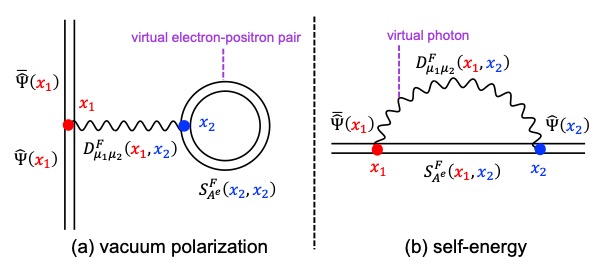
How did amino acids—the building blocks of life—form in the universe? To unravel this mystery, we need high-precision vibrational-rotational theory capable of accurately interpreting molecular spectra observed by telescopes and identifying molecules present in space. I am developing computational methods for calculating the “intramolecular tunneling effect” (Figure 1), which cannot be described based on the harmonic oscillator approximation or the rigid rotor approximation. Furthermore, by integrating rotation-vibration theory with reaction dynamics theory, I aim to construct a unified framework that can consistently handle both the reaction networks leading to the formation of amino acids and the prediction of interstellar spectra for the molecular species generated during these reactions. Once this research is complete, it will be possible to simulate the origins of life using a computer. Prior to joining Hokkaido University, I also conducted research exploring new physics beyond the Standard Model of particle physics based on relativistic quantum chemistry (Figs. 2–3).
Representative Achievements
Related industries
| Academic degree | Ph. D. |
| Self Introduction | I’m from Kanagawa. I played table tennis in middle school, high school, and university. You might think of table tennis as a wimpy sport, but at competitive schools, practice sessions are long and training menu includes weight training and running. I still run regularly, and since Sapporo is flat, it’s easy to run here. In high school, I was better at history than at chemistry or math. |
| Academic background | 2015 B. S., Chemistry Course, Faculty of Urban Liberal Arts, Tokyo Metropolitan University 2017 M. S., Department of Chemistry, Graduate School of Science and Engineering, Tokyo Metropolitan University 2018 Université Toulouse III-Paul Sabatier (Visiting PhD-student) 2020 Ph. D., Department of Chemistry, Graduate School of Science and Engineering, Tokyo Metropolitan University 2020 Assistant professor, Institute for Integrated Radiation and Nuclear Science, Kyoto University 2023 Postdoctoral researcher, Marie Skłodowska-Curie Actions Individual Fellowship (European Union, Horizon) 2026 Assistant professor, Faculty of Science Department of Chemistry, Hokkaido University |
| Affiliated academic society | Japan Society of Theoretical Chemistry, Japan Society for Molecular Science, Society of Computer Chemistry, Japan, Japan Society of Coordination Chemistry, The Physical Society of Japan, The Society of Electron Spin Science and Technology, The Atomic Collision Society of Japan |